
Modern Surgical Weight Loss Approach
Weight Loss Jorney
-
1. Who qualify?
Surgical Weight Loss with Dr. Yevhen Pavelko.
At the University of Illinois at Chicago, Dr. Yevhen Pavelko and his team specialize in advanced surgical weight loss procedures designed for patients seeking long-term, sustainable results.
Bariatric surgery is typically recommended for individuals with a Body Mass Index (BMI) of 40 or higher, or for those with a BMI of 35 or higher who have weight-related medical conditions such as type 2 diabetes, high blood pressure, sleep apnea, or heart disease.
Dr. Pavelko performs a full range of minimally invasive and robotic bariatric procedures — including gastric bypass, sleeve gastrectomy, revisional surgery, and complex foregut operations — within a designated Center of Excellence for Bariatric and Foregut Surgery.
These surgeries work by modifying the digestive system to limit food intake, alter hormone response, and improve metabolism. Beyond the procedure itself, every patient receives comprehensive support through nutritional counseling, behavioral coaching, and long-term follow-up.
With more than a thousand successful robotic cases, Dr. Pavelko combines surgical precision, advanced technology, and compassionate care to help patients regain their health, confidence, and quality of life.
-
2. Consultation
At your first meeting with Dr.Yevhen Pavelko, MD you will have a chance to get acquainted with them and the rest of our staff. This is the perfect time to talk about your medical history, any potential surgical alternatives, and ask any questions that you may have about undergoing the procedure.
What Should You Bring?To get started, make sure to bring your Analyses from your Primary Care Physician such as Blood work, including A1C levels, cholesterol, and kidney function. A summary of any existing health conditions, medications, and past treatments.
-
3. Evaluation before Prescription
In preparation for a successful weight loss procedure, it is important to complete a full evaluation before prescription. We will analyze various laboratory tests prior to undergoing treatment. In addition, you will be asked to complete a psychological and behavioural evaluation.
Further, you may be asked to receive medical clearance from your own doctor or a medical professional. Upon the review of your tests, we will contact you with the set date for the procedure. In addition, we will offer you advice to help you stay ready for surgery.
Are you eligible?
-
Dr.Pavelko taking into account all factors to determine whether you are an ideal candidate for weight-loss treatment.
-
You may be a candidate for weight-loss procedure if you meet any one of the following criteria:
Have a Body Mass Index (BMI) of 40 or more. Check your BMI to see if you meet any of these requirements.
Have a BMI between 35 and one or more obesity-related health condition, such as High blood pressure, Diabetes, Cholesterol etc.
-
Weight loss treatment requires mental preparation and understanding that it is not a quick fix. Long-term success depends on your commitment to lifestyle change and follow up care. The multidisciplinary team will support you through the initial period and follow up.
-
You are NOT alone on your journey. Your weight loss goals will also need the support of your family and friends. The UIC exclusively professional staff will support throughout the entire process until you reach your goal.
-
Patients must be over age 21.
Patients must not have any uncontrolled psychological conditions.
Patients must be free of drug, tobacco or alcohol abuse.
Patients must quit smoking at least 4 weeks before treatment and thereafter
Ready to take the first step towards a healthier you?
Explore the life-changing possibilities of weight loss surgery on our informative page. Discover the benefits, different procedures, and expert insights to help you make an informed decision. Your journey to a happier, healthier you starts here!
Types of Surgical Weight Loss!
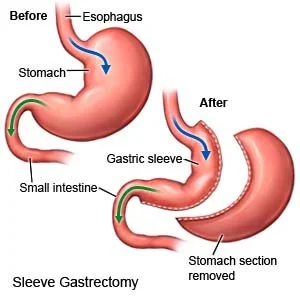
Sleeve Gastrectomy
A sleeve gastrectomy is a minimally invasive weight-loss procedure in which about 75–80% of the stomach is removed, leaving a narrow, tube-shaped “sleeve.” The smaller stomach helps you feel full after eating less food and also reduces hunger hormones such as ghrelin.
The operation is performed robotically or laparoscopically through small incisions, allowing for faster recovery, minimal pain, and fewer complications.
-
1️⃣ Significant and Sustainable Weight Loss
Sleeve gastrectomy removes approximately 75–80% of the stomach, creating a smaller “sleeve-shaped” stomach. This limits food intake and reduces hunger hormones (especially ghrelin), leading to effective, long-term weight loss in most patients.2️⃣ Improvement of Obesity-Related Conditions
Many patients experience remission or improvement of conditions such as type 2 diabetes, high blood pressure, sleep apnea, and high cholesterol within months after surgery. This improves overall health and life expectancy.3️⃣ Minimally Invasive and Faster Recovery
The procedure is performed laparoscopically or robotically through small incisions. This results in less pain, minimal scarring, a shorter hospital stay (1–2 days), and quicker return to normal activities compared to traditional open surgery. -
1️⃣ Sleeve gastrectomy involves permanent removal of part of the stomach. It cannot be reversed, although it can be converted to another bariatric procedure if necessary.
2️⃣ Risk of Complications
As with any surgery, there are risks such as bleeding, leakage along the staple line, infection, blood clots, or strictures. These are rare but require close monitoring and experienced surgical care.3️⃣ Possible Nutrient Deficiencies
Because the stomach is smaller, patients may eat less and absorb fewer nutrients. Vitamin B12, iron, calcium, and protein supplementation are often necessary to maintain long-term health.
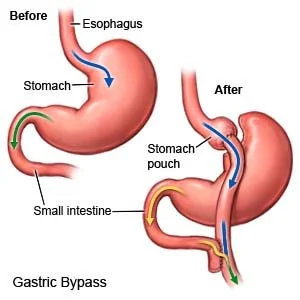
Gastric Bypass
Gastric bypass surgery (Roux-en-Y) is a minimally invasive weight-loss procedure that reduces the size of the stomach and reroutes a portion of the small intestine. This limits food intake and decreases calorie absorption, resulting in significant and sustained weight loss. The surgery also alters gut hormones, helping control appetite, blood sugar, and metabolism. It is one of the most established and effective bariatric procedures worldwide.
-
1️⃣ Significant and Durable Weight Loss
Patients typically lose 60–80% of their excess weight within the first 12–18 months after surgery, with long-term maintenance of results in most cases.2️⃣ Rapid Improvement in Metabolic Diseases
Gastric bypass often leads to immediate improvement or remission of type 2 diabetes, along with improvements in hypertension, sleep apnea, and high cholesterol.3️⃣ Effective Control of Acid Reflux
The procedure can significantly reduce gastroesophageal reflux disease (GERD) symptoms, especially in patients with obesity and hiatal hernias. -
1️⃣ Risk of Nutritional Deficiencies
Because food bypasses part of the small intestine, there’s a higher risk of deficiencies in iron, calcium, vitamin B12, and folate, requiring lifelong supplementation.2️⃣ More Complex Procedure
Gastric bypass involves creating two anastomoses (connections), making it more technically complex and slightly increasing the risk of leakage, strictures, or internal hernias.3️⃣ Potential for Dumping Syndrome
Patients may experience nausea, dizziness, or diarrhea if they consume high-sugar foods due to rapid gastric emptying (known as dumping syndrome).

SADI Surgery (Single-Anastomosis Duodeno-Ileal Bypass with Sleeve Gastrectomy)
SADI surgery is an advanced metabolic and bariatric procedure that combines two powerful techniques — a sleeve gastrectomy and a bypass of part of the small intestine.
It promotes weight loss through both restriction (a smaller stomach) and malabsorption (reduced calorie and fat absorption).
The procedure involves only one intestinal connection (anastomosis), which simplifies surgery compared to traditional gastric bypass or duodenal switch while maintaining excellent long-term results.
Performed robotically or laparoscopically, SADI is particularly effective for patients with severe obesity, metabolic disease, or those needing revision after previous bariatric surgery.
-
1️⃣ Superior Long-Term Weight Loss and Diabetes Control
SADI provides greater and more durable weight loss than sleeve gastrectomy alone and is highly effective in resolving type 2 diabetes, hypertension, and hyperlipidemia.2️⃣ Simplified Technique Compared to Duodenal Switch
With only one anastomosis, SADI reduces the risk of leakage and internal hernias while shortening operative time and improving safety.3️⃣ Robust Improvement in Metabolic Health
The rerouting of food and bile flow alters gut hormones, leading to improved insulin sensitivity, appetite regulation, and cholesterol balance. -
1️⃣ Potential for Nutritional Deficiencies
Due to the shorter absorptive length of the intestine, patients must take lifelong vitamin and mineral supplements and undergo regular lab monitoring.2️⃣ Increased Risk of Diarrhea or Malabsorption Symptoms
Some patients may experience frequent bowel movements, foul-smelling stools, or difficulty tolerating fatty foods, especially in the early months.3️⃣ Limited Long-Term Data Compared to Roux-en-Y Gastric Bypass
Although early results are excellent, SADI is a newer procedure, and long-term data (beyond 10 years) is still being collected.
Main information
-
An excessive body fat is a disorder with a serious risk of many health problems. Obesity is a results from excessive calories than are not burned through a day and by lack of exercise or daily activities. Persone considered obese with body mass index 30 or greater. The main symptom is excessive body fat, low eneregy level and ext.
Different weight can be classified by BMI (kg/m2) ranges:
Underweight: Less than 18.5
Optimum range: 18.5 to 24.9
Overweight: 25 to 29.9
Class I obesity: 30 to 34.9
Class II obesity: 35 to 39.9
Class III obesity: More than 40
Class I and Class II is considered severe obesity. Class III obesity (morbid obesity), is a complex chronic condition leading to serious health issues. The treatment options includes lifestyle changes, behavioral & psychological therapy, medication and surgical procedures.
-
A metabolism is the process when calories are converted into energy to fuel your body’s functions. When person consume more calories than it can use, our body converts the extra calories into fat tissue. Enlarged fat cells secrete hormones and many diferent chemicals that produce an inflammatory reaction affecting our body.
Type 2 diabetes.
Obesity raises the risk of Type 2 diabetes seven-folds. The risk increases by 20% for every additional point you gain on the BMI scale. The risk diminishes with weight loss.
Cardiovascular diseases.
High blood pressure, high cholesterol, high blood sugar and inflammation are all risk factors for cardiovascular diseases which are not limitted to coronary artery disease, congestive heart failure, heart attack and stroke.
Fatty liver disease.
The liver is responsible for filtering blood. Excess fats circulating in your blood travel to your liver which can lead to chronic liver inflammation (hepatitis) and long-term liver damage (cirrhosis) by storing excess fat inside your liver.
Kidney disease.
High blood pressure, diabetes and liver disease are main common contributors to chronic kidney disease which eventually will lead to end stage kidney disease, dyalisis and kidney transplant.
Gallstones.
Higher blood cholesterol levels can cause cholesterol to accumulate in your gallbladder, leading to cholesterol gallstones and potential gallbladder diseases.
Direct effects:Excess body fat can cover your respiratory system organs and musculoskeletal system. This contributes to such diseases as:
Asthma
Sleep apnea
Obesity hypoventilation syndrome
Osteoarthritis
Back pain
Gout
Indirect effects:
Obesity is also associated indirectly with:
Memory and cognition, including a heightened risk of Alzheimer’s disease and dementia
Female infertility and pregnancy complications
Depression and mood disorders
Certain cancers, including esophageal, pancreatic, colorectal, breast, uterine and ovarian
-
How is obesity treated?
We take into account your complete health profile that will determine your individual treatment plan. We will target your most urgent health concerns first following a longer-term weight loss plan. Every person is unique, that is why it common to take some trial and error to figure out which therapies work best for you. Studies have shown that team-based programs with frequent, personal communication between your physician and you will help to lose weight and maintain desired body. Such approach is the most successful.
Dietary changes
The dietary changes you personally need to make to lose weight will be individual to you. Our professional dietician will create individual plan for you.
Increased activity
The diet and exercise are both important to weight loss and weight maintenance. Walking at a moderate pace is one of the most efficient types of exercise for weight loss.We advise you in great details regarding activity changes.
Behavioral therapies
Counseling,support groups and cognitive behavioral therapy are methods that may play an important role in supporting your weight loss journey. Such methods can help you to manage stress, emotional and psychological factors that may be working against you.
Medication
We may recommend to use medications in conjunction with other treatments but this method aren’t the whole answer to weight loss.
Weight loss surgery
Surgery is a not easy option but highly effective solution to long-term and significant weight loss. If you are diagnosed with class II and III obesity, bariatric surgery may be solution for you. All bariatric surgery procedures can change your digestive system in different ways. Some of them can restrict the number of calories you can consume while other affect your calories absorption as well as hormonal changes.